




















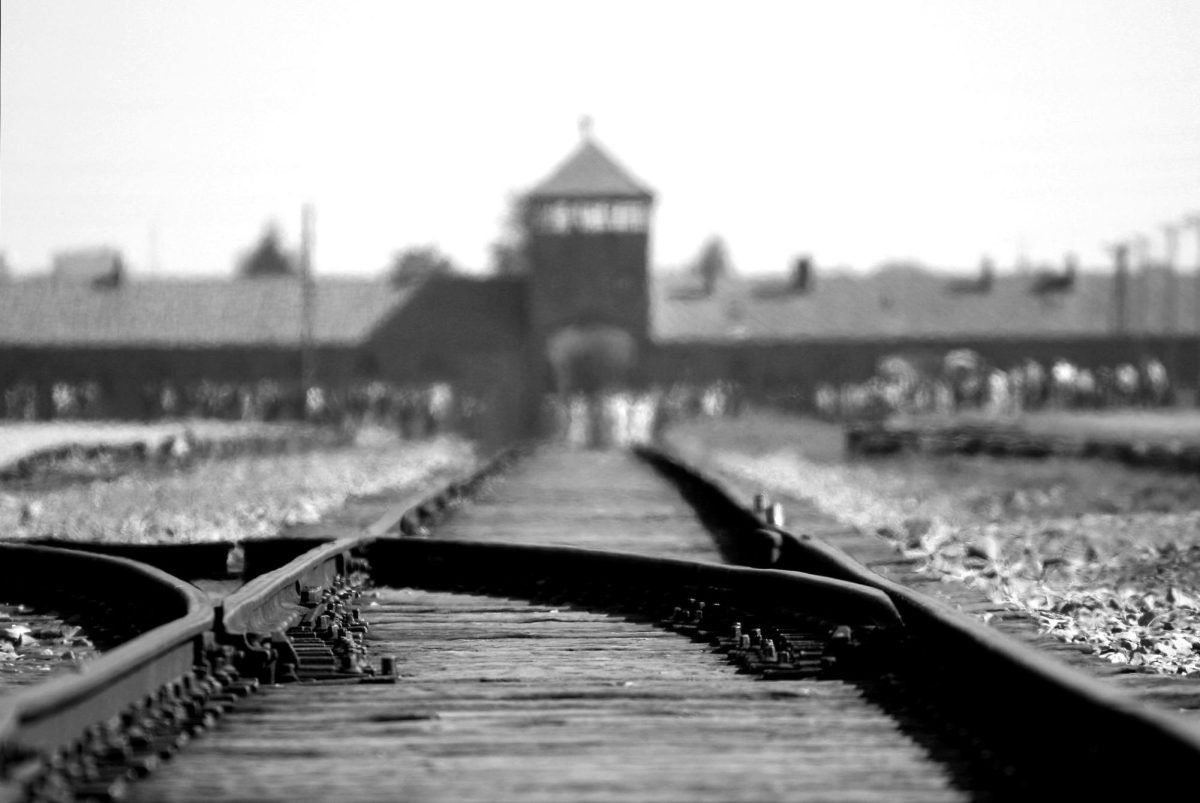
Holocaust Remembrance Week. A week set aside for the world to honor the six million Jewish people who died during the Holocaust. While a majority of the world honors this important and heavy week, around 63% of people in the United States do not fully understand the weight of it history.
The Holocaust was a tragedy that occurred across Europe during the second World War, specifically targeting people who followed Judaism, those who were LGBTQ+, people who suffered from disabilities, people who were black, Slavic, and other marginalized ethnicities and communities. Under Adolf Hitler’s regime, if a person’s identity wasn’t considered “pure,” by his government, they were imprisoned in concentration camps or killed in the streets.
Despite the horrific extent of Hitler’s violence, only 30 U.S. states require Holocaust education in schools in 2026. In other words, students in 20 states are left uninformed about the terrors that the Holocaust inflicted across Jewish people and other minorities. Although the Holocaust occurred 80 years ago, the value of Holocaust education lies in the fact that history is prone to repeat itself. To remember these outrageous events and prevent the repeated persecution of minorities, we look to the testimonies of Holocaust survivors from the 1930 and 1940s.
Famous survivors of the Holocaust like Elie Wiesel are advocates for the people who sadly lost their lives to horrific concentration camps and the Nazi regime. For his work as a spokesperson for the Holocaust and the horrors that occurred inside his camp, Elie Wiesel won a Nobel Peace Prize. Even after his passing in 2016, his legacy and messages live on through his speeches, books, and beautifully constructed advocacy. He strived to make it known that the Holocaust was not simply a small event against the background of a larger world history – it represents the most dreadful parts of humanity.
Elie Wiesel’s story represents an important example of the value of Holocaust education in schools. However, a complete education of the atrocities of the Nazi regime is incomplete without knowledge of Auschwitz, the most well-known concentration camp during the rule of Nazi Germany. Prisoners were divided into three distinct sections: Auschwitz I, which was known for holding political prisoners; Auschwitz II-Birkenau, the main extermination site that could fit up to 2000 people into a gas chamber where they were suffocated by Zyklon B before being burnt to ashes; and Auschwitz III-Monowitz, which was the primary labor camp. In conjunction with each other, these three sections inflicted unspeakable horrors upon Jewish people. The sheer magnitude of their suffering necessitates analysis and remembrance in schools – of personal testimonies, camps, and millions of deaths.
The atrocities of the Holocaust are impossible to define, but it is the responsibility of public schools to inform students of its weight. Understanding the most horrific events in world history guards society against further tragedy, as students will be able to identify policies and events that mirror past atrocities. Every student is deserving of this skill, and no school is exempt from promoting it – because indifference is just as bad as enabling.