




The Great Gatsby. Eu Recebia as Piores Notícias Dos Seus Lindos Lábios. Not Even the Silence Belongs to You Anymore. 1984.
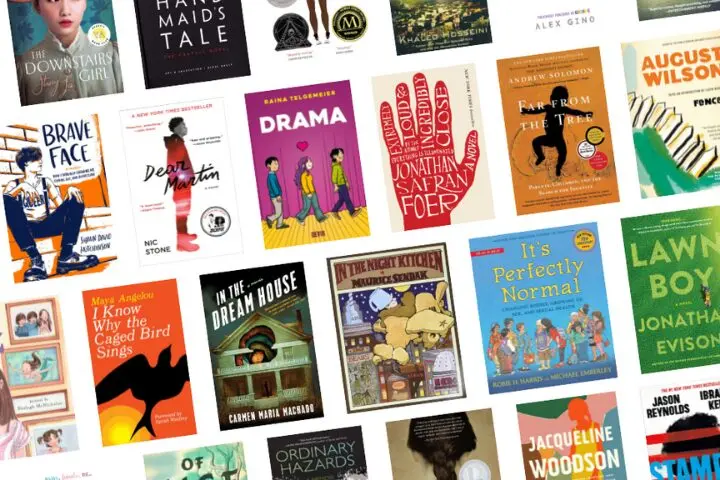
These novels detail vastly different plots, were produced by authors from starkly different cultures, and were even written in different languages. However, they have one thing in common: these are just a few of the books that have been either censored or challenged by governments and educational institutions across the world.
When many people think of book-banning, they picture heated parent-teacher meetings on school boards in the United States, where novels are deemed too sensitive for the next generation. In reality, the censorship of literature is an emerging problem on an international scale and has been for some time.
For example, Brett Easton Ellis’s infamous novel American Psycho is heavily censored in Australia for its depiction of sexual and violent themes. While some of its content is surely too mature for schoolchildren, Australian law also dictates that the book must be covered in shrink wrap before purchase and only sold to customers whose IDs confirm they are legal adults. The book’s censored status means that versions shelved without shrink wrap must be confiscated from bookstores by local police.
Much like the United States, some European nations have increasingly censored LGBTQ+ literary content over the last twenty years. According to poverty advocacy nonprofit The Borgen Project, the Hungarian Parliament banned any and all promotion of LGBTQ+ content in school curricula in 2021. This new legislation has restricted students’ access to the work of accomplished writers such as Imre Kertész and Péter Esterházy simply because their publications may contain LGBTQ+ characters.
More recently, provincial Canadian governments have begun to censor classic pieces of American literature from their school systems. A school board in Edmonton, Alberta (operating under the direction of their local government) challenged Margaret Atwood’s The Handmaid’s Tale from schools. Largely regarded as a classic that warns against totalitarianism, oppression toward women, and censorship itself, it was ironically banned by the school board in September of 2025.
While many people consider book banning a uniquely American political topic, in reality, the issue has existed in dozens of highly populated countries for years. Memoirs, fiction, and dystopian novels alike are brought together by heavy and excessive censorship of their content.