


















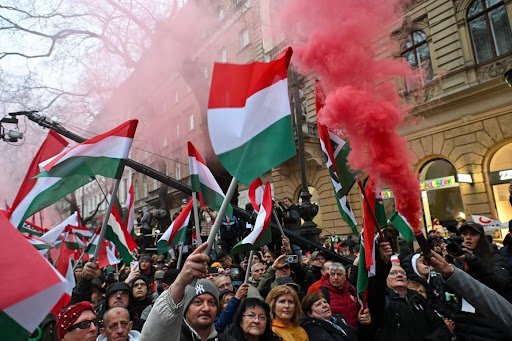
With many important elections taking place around the world, Hungary’s upcoming 2026 parliamentary vote in April stands out as one of the most significant. Prime Minister Viktor Orbán and his right-leaning party, Fidesz, which has ruled over Hungary for fifteen years, are facing their strongest challengers yet.
Bridging Hungary and Europe
The main opposition is the Tisza Party Leader Péter Magyar, a pro-European reformist who wants to strengthen Hungary’s devotion to the European Union and NATO. In the process, he aims to gradually remove some of the more draconian aspects of Orbán’s rule.
“We will finally put our common affairs in order. Our homeland, Hungary, will once again be a proud and reliable ally of NATO. Hungary will once again be a full-fledged member of the European Union,” said Maygar to a crowd of supporters earlier this year. He pitches his campaign primarily to the youth, who have been voicing their discontent with the Fidesz rule more and more over the last few years.
Economic Woes
Aside from democratic concerns, the economic situation may also be a decisive factor in the elections. In the past few years, Hungary has been hit by economic stagnation and higher prices. The central bank stated in February that Hungary experienced the worst inflation in the European Union following Russia’s February 2022 invasion of Ukraine. In the last parliamentary election, Orbán launched a $5.35 billion spending spree to address social issues at the cost of extreme inflation, though he ultimately won with a landslide victory. He has since introduced cheap loans and housing support to win back public support before the elections. However, if the situation does not improve soon, experts warn that he won’t be as lucky this time around.
Rhetoric and the Media
The election has heated up. During Hungary’s commemoration of the 1956 anti-Soviet uprising, both Orban and Magyar used the opportunity to invigorate their supporters. Orban asserted that the European Union was attempting to implement a “puppet” government within Hungary and claimed next year’s election was a decision between internal peace or to “die for Ukraine.” Meanwhile, Maygar lamented on Orban’s political history. “That politician who demanded Russian troops should leave Hungary, now is the most loyal ally of the Kremlin,” Magyar said, referencing the latter’s rise to power by standing up to the Soviet Union. “He built a system in which power is centralised, the press is under control and the country is ruled by fear.”
Conclusion
The atmosphere of the campaign season remains hot and divided. The mainstream media, which critics claim to be under Orbán’s thumb, portrays Tisza as inexperienced and weak. Alternatively, the Magyar campaign is using social media and grassroots organizing to overcome this disadvantage.
It is ultimately undeniable that the upcoming election is integral to Hungary’s future. The outcome will shape Hungary’s domestic and international politics for decades, yet one thing is certain: Magyar has the momentum on his side.