



















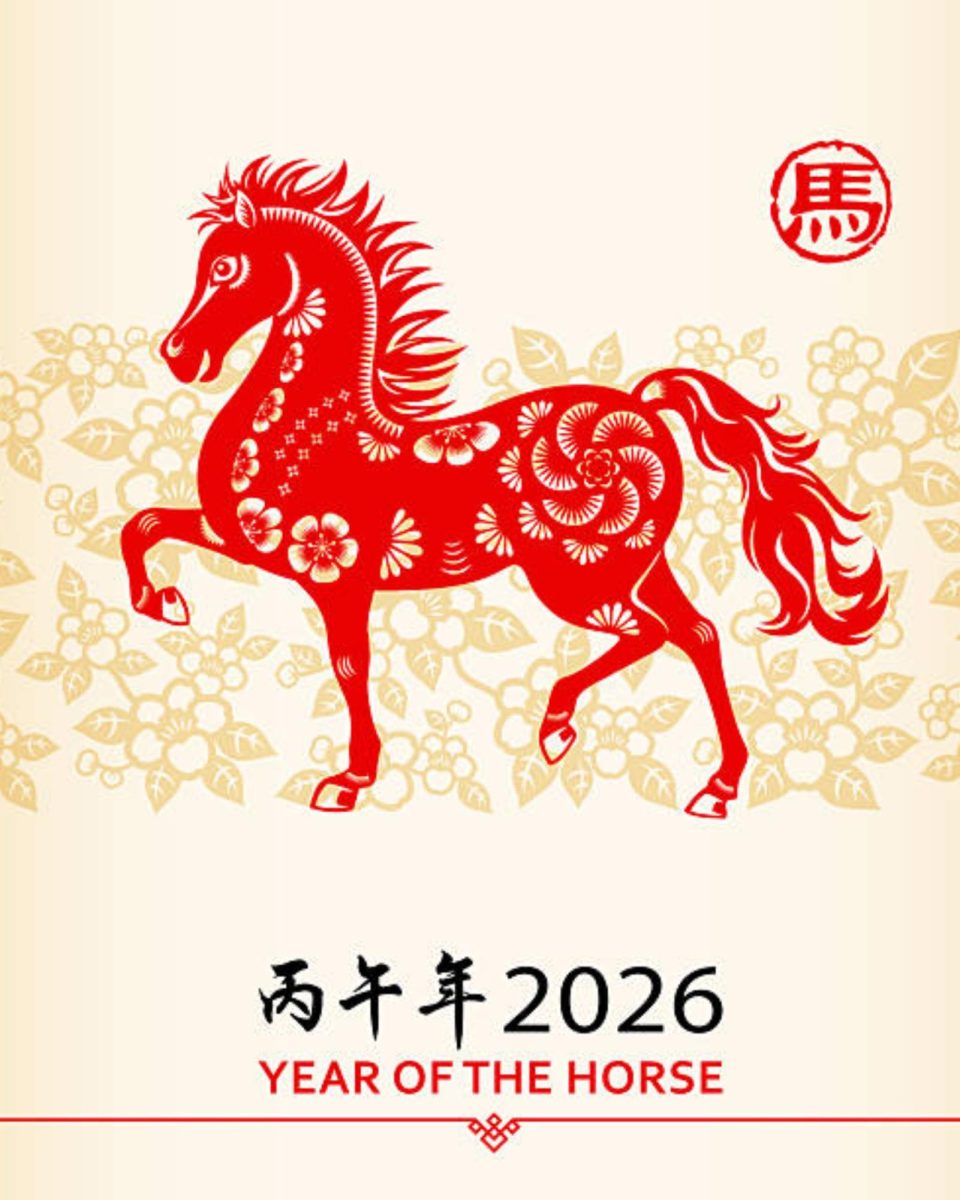
Lunar New Year or Chinese New Year, started on Feb 17, this Tuesday. While this is constantly tossed around by people all across the world, it’s likely they don’t know the true meaning behind the celebration.
The Lunar New Year started from the myth of Nian (“year” in Mandarin Chinese), a mythological monster who would attack villagers, devour crops and livestock, and wreak havoc across the villages at the beginning of the year. To fend off the monster, the Chinese villagers would use bright lights, loud noises, and the color red, since Nian was afraid of them. This started the traditions of wearing red clothing, lighting firecrackers, and hanging lanterns for the Chinese people.
A well-known part of the Lunar New Year is the myth of the Chinese Zodiacs. In the story, the Jade Emperor declared there needed to be a way to tell time, and stated the first 12 animals to cross a river would be a part of the calendar. The rat finished first after tricking the ox into letting it climb on its back, being able to cross the river with the ox instead of having to fight the current. The tiger finished third, the rabbit fourth, the dragon fifth, the snake sixth, the horse seventh, the goat eighth, the monkey ninth, the rooster tenth, the dog in second to last, and the pig in last place. This year, 2026, is the year of the horse, and it represents independence, strength, energy, and a free spirit.
The Lunar New Year celebration can last up to fifteen days, with the eve of the event having a huge feast in preparation for it. The food includes fish, puddings, dumplings, rice cakes, noodles, etc. These foods vary depending on the region, though, with certain places liking steamed rice as a dish along with their meal. In the first few days of the Lunar New Year, the Chinese people usually reserve this time for visiting family and friends, celebrating the people they love. People’s homes will often have gifts inside for visitors, and the gifts are usually meant to bring good luck and prosperity for the new year. On the third day, people will go and visit a temple due to the belief that arguments are more likely to happen during this time. On the seventh day, it is believed to be humanity’s birthday by the Chinese because the goddess Nuwa created humanity on whatever day this falls on. On the final day, day 15, the lantern festival takes place. It celebrates the first full moon of the year and the beginning of the spring season, with people lighting lanterns to symbolize hope.
Lunar New Year holds age-old traditions. Kathryn Knox, the sponsor of the Chinese Club at Lake Travis High School, stated, “[the Chinese club] learned age-old advice like not to wash [their] hair or do dishes so [they] don’t wash away good fortune.” This is just one of many traditions, with others including wearing red, eating fish for abundance, and giving hongbao (red envelopes) filled with money.
As cultures are learned about, more understanding and respect are shown towards other people who don’t have the same background as them. It is important to learn about these cultural events, especially since they are often spoken about without much meaning or intention behind them.