



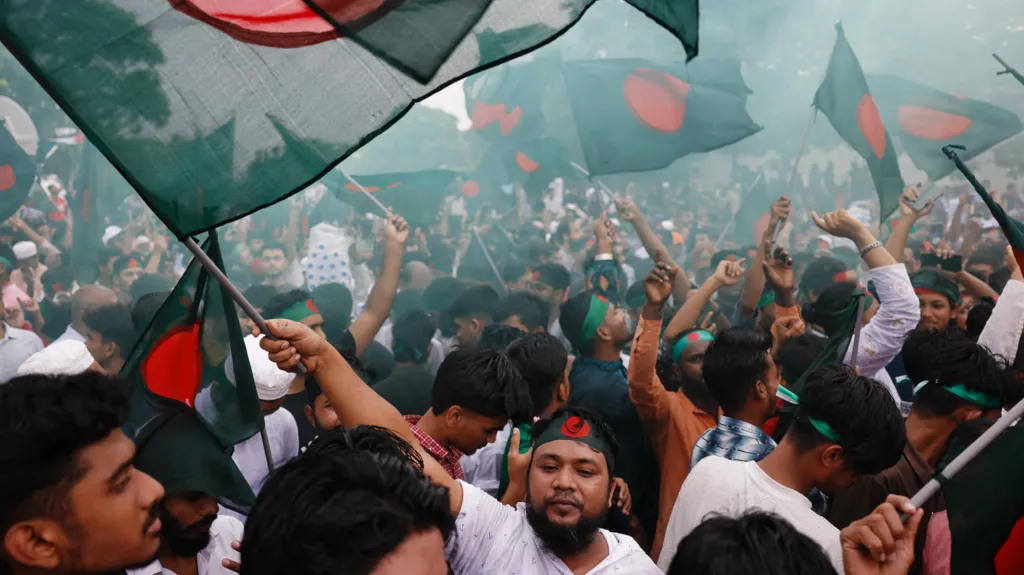
















On February 12, 2026, the people of Bangladesh cast their ballots. The election was the first after the dramatic fall of former prime minister Sheikh Hasina, whose administration faced mounting protests over a quota system for government jobs, and later, accusations of authoritarianism. She was eventually ousted, and her party, the Awami League, was banned from running, leaving the field more open than it has been for decades. Economist Muhammad Yunus has served as Bangladesh’s Chief Advisor since Hasina’s resignation.
Polling stations opened early in the capital, Dhaka, and in districts across the country. Officials described the process as largely peaceful, with turnout at nearly 60 percent. Preliminary results from the Bangladesh Election Commission show a resounding victory for the Bangladesh Nationalist Party (BNP), which secured a strong majority in the 300-seat parliament. According to unofficial tallies released by the commission, the BNP won roughly 209 seats, while the Islamist Jamaat-e-Islami party won 68. The youth-led National Citizen Party also secured a handful of seats.
At the center of the BNP is Tarique Rahman, who is expected to take office as prime minister. Rahman, the son of former Prime Minister Khaleda Zia, spent many years abroad before reentering politics.
“We are about to begin our journey in a situation marked by a fragile economy left behind by the authoritarian regime, weakened constitutional and statutory institutions, and a deteriorating law and order situation,” Rahman stated after his victory.
Absent from the ballot was the Awami League, historically one of the country’s two dominant parties. The Awami League won every general election from 2008 to 2024, though the legitimacy of some of the wins remains disputed due to the power Hasina had over the electoral commission.
International observers praised improvements in transparency compared with previous contests. However, economists say the incoming government will face immediate challenges, including foreign exchange pressures and job creation for a young populace.
For many citizens, the election represents both an end and a beginning. After years of political strain, voters are watching closely to see whether the new leadership can translate campaign promises into meaningful reform in the country’s democratic path.